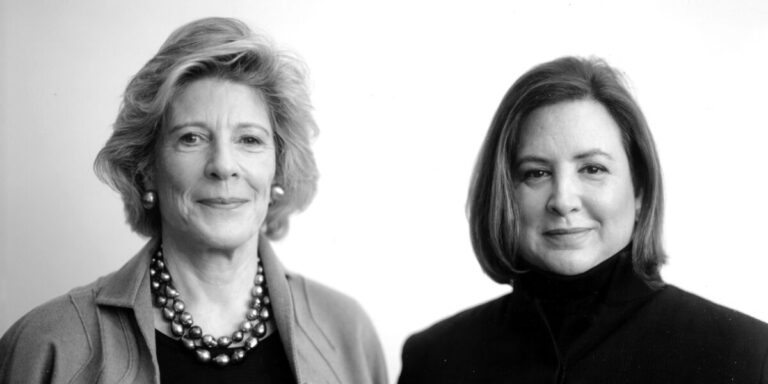
Aggie and I often recalled that the Center for Curatorial Leadership began with a meeting held at the Guggenheim in 2005. Leaders of museum boards of trustees from around the country gathered to talk to a group of curators.
When asked if curators could become museum directors, Aggie responded “I’m on six search committees. This is what happens in a search. There’s the ‘A’ group: people you want, but they don’t want you. There’s the ‘B’ group, which is what you hope to end up with: you want them, and they want you. Then there’s the ‘C’ group: people who want you, but you don’t want them. We never get to the ‘D’ group. That’s the curators.”
It was a characteristic Aggie comment: a sharp wit cloaking a dead serious moral concern. Around that time, Aggie had tried to start a curatorial leadership program at a large university. It lasted just two years.
Soon after the Guggenheim meeting, Aggie and I spoke about the need for something like the Center for Curatorial Leadership. Unprompted, she told me, “I’m going to fund this completely so that you can focus on designing a program, because if you have to worry about raising money, you’ll never have the time.” What donor ever says that? But for five years, Aggie did just that.
Aggie was CCL’s moral compass, protector, and Grande Dame. Every big decision we made was influenced by her thinking and experience. Initially I hesitated before asking too much of her. Then, one day, she said to me, “You never ask me to do the only thing I ever cared about.” I was taken aback. What was it? “Help choose the candidates,” Aggie exclaimed! Every year thereafter she carefully studied enormous binders amounting to nearly 1,000 pages, helping select curators out of a robust applicant pool for our core Fellowship program. She had no snobbery about which institution someone came from — except she did, perhaps, show a slight bias toward anyone from Ohio, and especially anyone who worked at the Cleveland Museum of Art.
Aggie was opinionated. She had some objections to the CCL logo. “My family is involved with sports,” she told me once. “I really understand logos.” But she was also extraordinarily open to hearing someone else’s opinion and changing her mind. (We kept our logo.)
She loved having a give-and-take with fellow lovers of art and museums, and CCL offered the opportunity for her to meet curators from around the world. Every single one of our almost 500 alums has sat in Aggie’s living room to talk, followed by dinner with her. She seemed to have an aperçu or anecdote about every museum or university that one of our fellows could conceivably have come from. When asked about herself — how she first got interested in art, for example — she regaled us all with the stories of her life. Since the notice of her death, I’ve been struck by the dozens and dozens of emails from alums who remember sitting in that living room, talking about their dreams with Aggie.
Her audiences were rapt in part, I think, because they sensed in Aggie a certain majesty. Once, when Aggie accompanied me to a meeting with our most important funder, I was struck that the President of that foundation was waiting for us at the front door. In rooms with some of our potential funders, she would connect with them by observing something about them, their office, what they had hanging on their wall, the books on their shelves. I would see their eyes light up. They were being offered a little bit of Aggie’s magnificence.
It’s hard to think of a future without that remarkable person. And yet I also feel an even deeper gratitude that Aggie made CCL possible, giving so much to so many people and museums — and that, too, was just a modest part of a lifetime devoted to art and social justice. I am out of words to describe Aggie’s importance to me, to this organization, and to our profession, so I will borrow the words of Gary Tinterow, my close friend and alum of the first CCL class: “No individual has supported curators more, or better, than Aggie Gund.”
Elizabeth W. Easton
Director and Co-Founder